Sign in
 Sign up





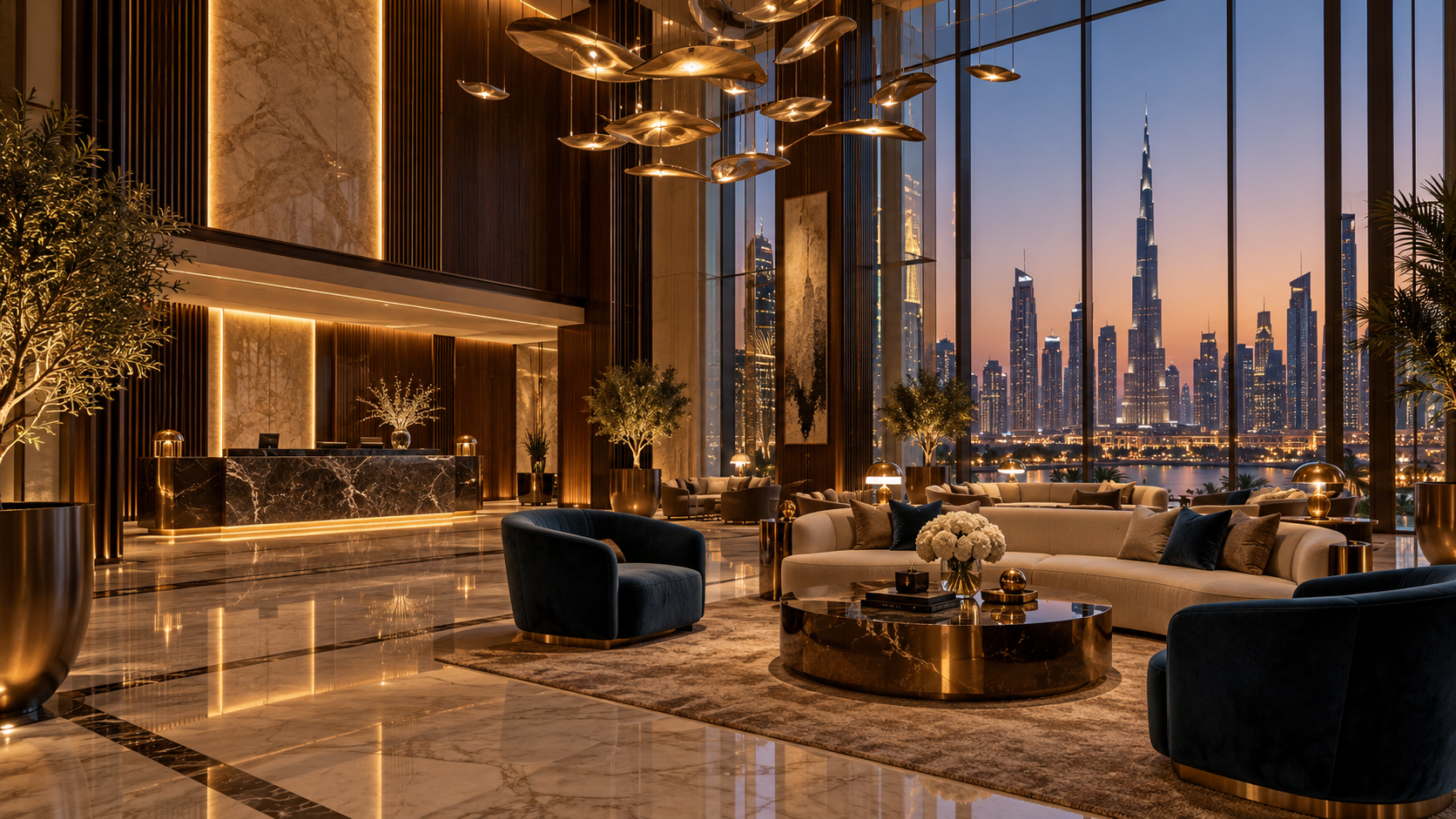
Dubai remains the world's largest market for branded residences, and the gap to its nearest rival is widening rather than closing. The Global Branded Residences Annual Report 2025–2026 counts 184 schemes in the emirate — 68 already completed and 116 in the pipeline — more than twice the total recorded in Miami, which ranks second with 85. São Paulo follows with 39 and New York with 36. Across the UAE the report logs 75 completed schemes and 185 in development, the largest forward pipeline of any country.
How the global table looks
Different consultancies count the sector differently, and the gap is worth noting: Knight Frank's The Residence Report 2026-27, published in late September, puts Dubai at 175 schemes — 68 operational and 107 planned — with Miami at 73 and London at 30. The discrepancy comes from methodology rather than from the market, since definitions of what qualifies as a branded scheme vary. Both counts agree on the direction. Knight Frank also places the UAE at 19 per cent of the global development pipeline, with Abu Dhabi eighth worldwide on 24 schemes and Ras Al Khaimah ninth on 23, nearly all of them on Al Marjan Island, while the Middle East as a whole accounts for a quarter of the global pipeline.
The brands are no longer mostly hotels
The more interesting shift is in who is lending the name. Brands from outside hospitality now account for 42 per cent of Dubai's branded residential schemes — a model that started with hotel operators and has moved well beyond them. Bugatti Residences by Binghatti, Mercedes-Benz-branded homes, Jacob & Co and Chelsea Residences by DAMAC all sit in this category, pairing a developer's project with a name borrowed from cars, watches, jewellery or football rather than from a hotel group. For buyers this changes what the badge actually delivers: a hotel brand usually brings an operator and a service standard, while a lifestyle marque may bring design and prestige without day-to-day management attached.
What the name on the building costs
The premium is substantial and contested. The Global Branded Residences report puts the average uplift at 44 per cent over comparable unbranded stock worldwide, rising to 59 per cent across MENA. Knight Frank's own work is more conservative for Dubai specifically, at around 35 per cent on average and up to 55 per cent for marques such as Aman, Four Seasons and the Dorchester Collection. With 116 schemes still to come, that uplift is the figure under the most pressure. Louis Harding, a partner at Knight Frank, notes that purchasers are increasingly looking beyond the name on the building and weighing the property, the location and the quality of service more carefully.
That is the practical takeaway. A branded residence is only worth its premium if the badge comes with something measurable: a named operator with a management contract, a defined service standard, and a brand agreement long enough to outlast the handover. Worth asking before signing: who operates the building, for how long, what the service charges per square foot will be, and what happens to the branding — and the price — if the agreement is not renewed.